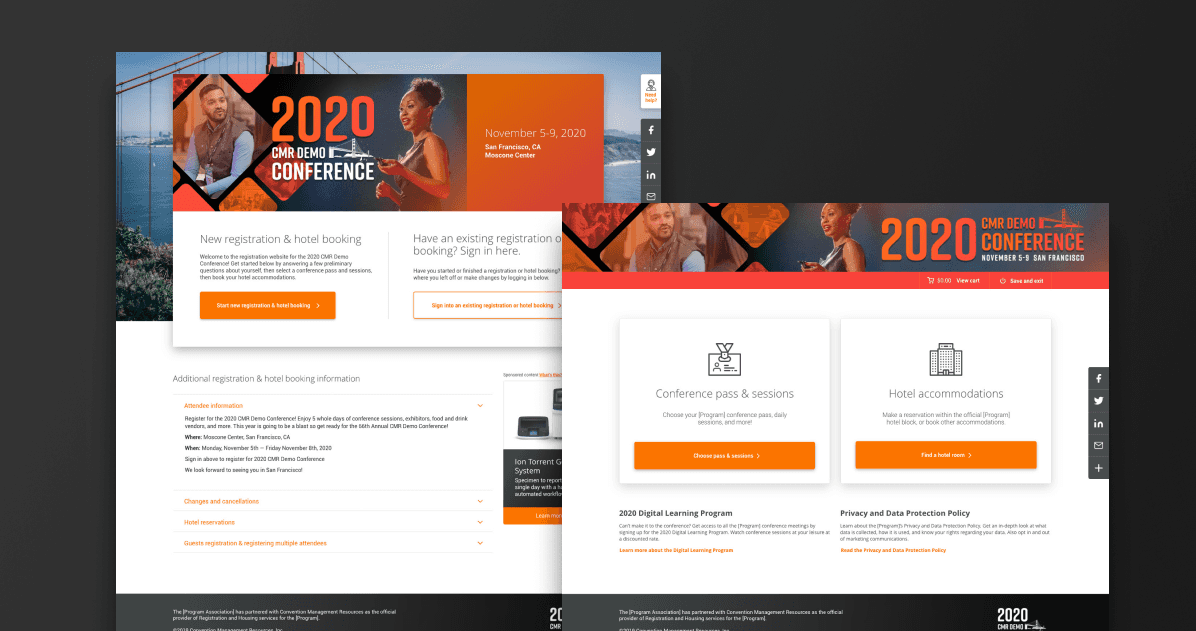
UX & UI design
Official UX design process for Convention Management Resources (CMR)
Official UX design process for Convention Management Resources (CMR)
Previously an engineering-first organization, I convinced CMR that starting with UX design reduces expensive downstream development time.
Previously an engineering-first organization, I convinced CMR that starting with UX design reduces expensive downstream development time.
Stages
Problem
I joined the CMR team in 2019 specifically to bring UX and UI design into the product development process. Even as they hired me, it was clear that leadership wasn't fully convinced of the value of UX and UI design, but were willing to take a chance. As I onboarded, the marketing and dev teams were quick to help me understand their gaps.
During my first month at CMR, I began to observe our issues:
CMR was an engineering-first organization with a business-centric approach to their event-registration product
Without dedicated UX designers, no one was focused on understanding and advocate for end-users before development started
Without UI designers the visual experience of the registration product was dated, clunky, and didn't match the value of the CMR brand
The software development process was very long because without a properly tested design they were forced to continually iterate while coding.
Problem
I joined the CMR team in 2019 specifically to bring UX and UI design into the product development process. Even as they hired me, it was clear that leadership wasn't fully convinced of the value of UX and UI design, but were willing to take a chance. As I onboarded, the marketing and dev teams were quick to help me understand their gaps.
During my first month at CMR, I began to observe our issues:
CMR was an engineering-first organization with a business-centric approach to their event-registration product
Without dedicated UX designers, no one was focused on understanding and advocate for end-users before development started
Without UI designers the visual experience of the registration product was dated, clunky, and didn't match the value of the CMR brand
The software development process was very long because without a properly tested design they were forced to continually iterate while coding.
Approach
As the newest CMR team member, and the only designer, my primary goal was to set the stage for good design practices.
I began by:
Understanding current, longstanding processes and carefully gain enough context before I challenged anything.
Building relationships with stakeholders to establish good faith and position myself as a trusted design authority.
Determining which UX tools & methodologies would yield the most value in the shortest amount of time.
Increasing trust in UX/UI design by communicating my design thinking to leadership, showing stakeholders how it will drive value for clients, lead to scalable operations, and save the company money during development.
Approach
As the newest CMR team member, and the only designer, my primary goal was to set the stage for good design practices.
I began by:
Understanding current, longstanding processes and carefully gain enough context before I challenged anything.
Building relationships with stakeholders to establish good faith and position myself as a trusted design authority.
Determining which UX tools & methodologies would yield the most value in the shortest amount of time.
Increasing trust in UX/UI design by communicating my design thinking to leadership, showing stakeholders how it will drive value for clients, lead to scalable operations, and save the company money during development.
Solution
My solution was to establish a step-by-step UX/UI process aimed at uncovering as much information as possible to drive a user-centric design and significantly reduce development time.
I executed my process with the following phases:
Discovery: the preliminary phase of a project dedicated to understanding the problem space rather than designing solutions. It involves researching user behaviors, pain points, and business goals to ensure the team solves the right problem before creating anything.
Persona generation: It is important to design for the specific people who use, or will be using your product. Utilizing user information gathered during discovery, we'll pick 2-5 personas who represent your most important end-users.
Wireframing: These simple design skeletons (Figure 1) help teams and stakeholders align on project requirements and user flow early on before costly design or coding work begins. Identifying usability flaws or structural issues during the wireframe phase is much faster and cheaper to fix than altering the design during development.
Prototyping: Prototyping transforms static wireframes into tangible, dynamic experiences, helping teams validate ideas, identify flaws quickly, and save precious resources.
User testing & iteration: Share the prototype with end-users, or user proxies (internal team members who best understand the end-users) to challenge assumptions and generate honest feedback. This often involves monitored user interviews where they are asked to complete common tasks while their screen is recorded. Utilize testing feedback to improve the design, then re-test to gather more feedback.
Hi-fidelity mockups: Once the wireframes have been tested, we move on to visually rich, fully branded mockups that help bring the wireframes to life. This involves brand colors, typography, and polished UI elements which will show the dev team exactly how the front end will appear.
Hand-off to development team: Once stakeholder have aligned and approved the hi-fidelity mockups (and matching prototypes), all design assets will be packaged and shared with the developers. The design team will then work closely with the dev team to provide feedback along the way.
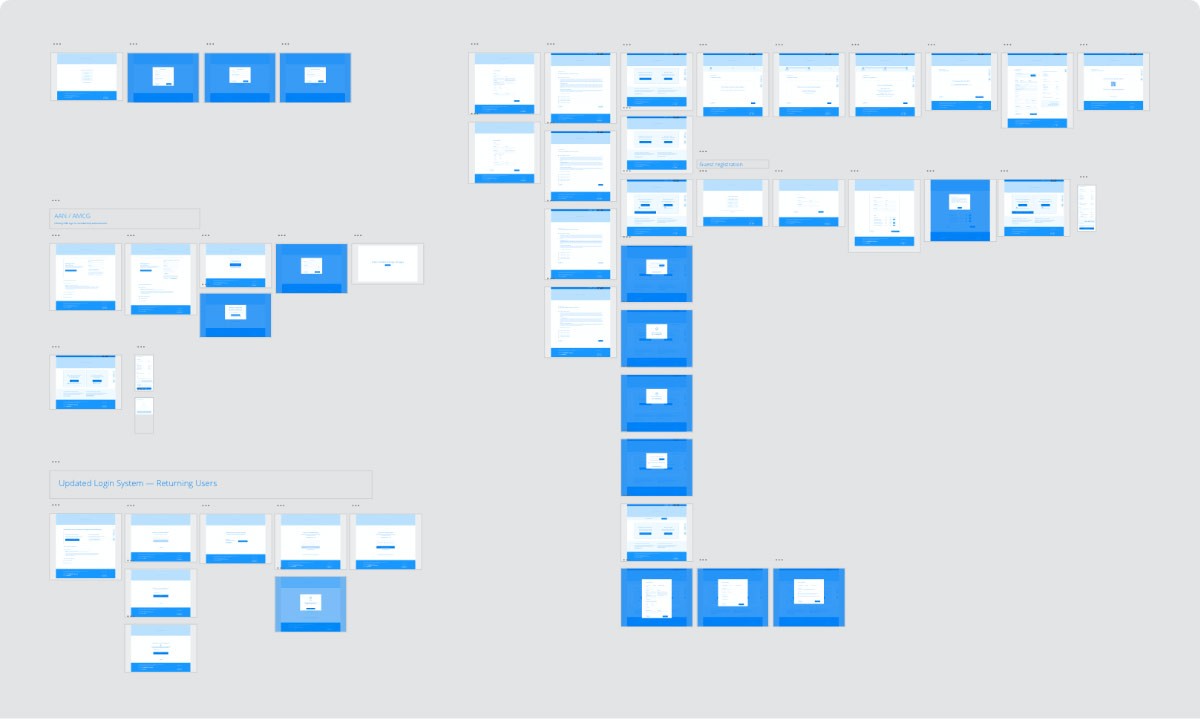
Figure 1. Wireframe map for CMR's event registration product. This map shows final wireframes for each step in the end-user event registration process. These were used to create the prototype during user testing.
Solution
My solution was to establish a step-by-step UX/UI process aimed at uncovering as much information as possible to drive a user-centric design and significantly reduce development time.
I executed my process with the following phases:
Discovery: the preliminary phase of a project dedicated to understanding the problem space rather than designing solutions. It involves researching user behaviors, pain points, and business goals to ensure the team solves the right problem before creating anything.
Persona generation: It is important to design for the specific people who use, or will be using your product. Utilizing user information gathered during discovery, we'll pick 2-5 personas who represent your most important end-users.
Wireframing: These simple design skeletons (Figure 1) help teams and stakeholders align on project requirements and user flow early on before costly design or coding work begins. Identifying usability flaws or structural issues during the wireframe phase is much faster and cheaper to fix than altering the design during development.
Prototyping: Prototyping transforms static wireframes into tangible, dynamic experiences, helping teams validate ideas, identify flaws quickly, and save precious resources.
User testing & iteration: Share the prototype with end-users, or user proxies (internal team members who best understand the end-users) to challenge assumptions and generate honest feedback. This often involves monitored user interviews where they are asked to complete common tasks while their screen is recorded. Utilize testing feedback to improve the design, then re-test to gather more feedback.
Hi-fidelity mockups: Once the wireframes have been tested, we move on to visually rich, fully branded mockups that help bring the wireframes to life. This involves brand colors, typography, and polished UI elements which will show the dev team exactly how the front end will appear.
Hand-off to development team: Once stakeholder have aligned and approved the hi-fidelity mockups (and matching prototypes), all design assets will be packaged and shared with the developers. The design team will then work closely with the dev team to provide feedback along the way.
Figure 1. Wireframe map for CMR's event registration product. This map shows final wireframes for each step in the end-user event registration process. These were used to create the prototype during user testing.
Outcome
While I wasn't with CMR long enough to see my hard work come to life, it was clear that this new design-first approach had a lasting impact on the organization.
My design leadership yielded:
Enthusiastic acceptance of a design-first approach
Elevated company understanding of UX and UI design value
Cross-functional morale boost as everyone including senior leadership saw how the new design would increase brand value and a much easier registration experience for end-users
A streamlined development process due to a diligently tested design with clear requirements
45%
Decrease in development turnaround time (projected)
35%
Decrease in custom client feature requests (projected)
Outcome
While I wasn't with CMR long enough to see my hard work come to life, it was clear that this new design-first approach had a lasting impact on the organization.
My design leadership yielded:
Enthusiastic acceptance of a design-first approach
Elevated company understanding of UX and UI design value
Cross-functional morale boost as everyone including senior leadership saw how the new design would increase brand value and a much easier registration experience for end-users
A streamlined development process due to a diligently tested design with clear requirements
45%
Decrease in development turnaround time (projected)
35%
Decrease in custom client feature requests (projected)
Nicholas Fargher
© 2026 Nicholas Fargher
Nicholas Fargher
© 2026 Nicholas Fargher