UX & UI Design
The perfect eShop product detail page
The perfect eShop product detail page
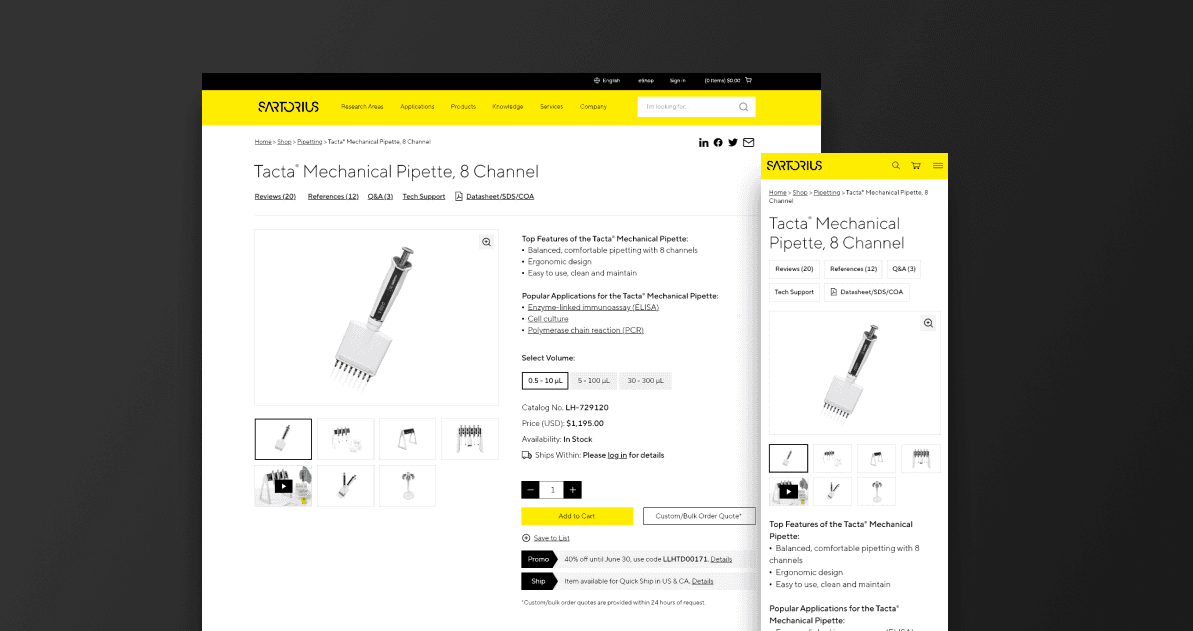
I co-led the complete redesign our eShop PDPs, elevating a key touchpoint in the customer buying journey
I co-led the complete redesign our eShop PDPs, elevating a key touchpoint in the customer buying journey
Stages
Problem
Our eShop lacked critical modern product detail page (PDP) features, which led to customer confusion and an immature shopping experience. Because shoppers could not find immediate answers to lingering questions online, they were forced to contact customer service or sales reps. This manual intervention wasted valuable organizational time, increased operational costs, and delayed the purchase journey.
Problem
Our eShop lacked critical modern product detail page (PDP) features, which led to customer confusion and an immature shopping experience. Because shoppers could not find immediate answers to lingering questions online, they were forced to contact customer service or sales reps. This manual intervention wasted valuable organizational time, increased operational costs, and delayed the purchase journey.
Approach
A colleague approached me in 2022 to revisit a project I had started for Sartorius in 2020. She was keen to revisit our PDPs leveraging my discovery and research insights, which included:
Discovery:
Goals, expectations, and customer needs
Existing internal feedback
Research:
eCommerce best practices
Competitive analysis
Systems familiarity
Take inventory of existing Sartorius PDP features, identify gaps, and make recommendations.
Download my initial report
My colleague built upon this initial research to determine what our direct competitors were offering customers and where we were falling behind. Additionally, she gathered industry data and insights to drive a better experience for our customers.
Approach
A colleague approached me in 2022 to revisit a project I had started for Sartorius in 2020. She was keen to revisit our PDPs leveraging my discovery and research insights, which included:
Discovery:
Goals, expectations, and customer needs
Existing internal feedback
Research:
eCommerce best practices
Competitive analysis
Systems familiarity
Take inventory of existing Sartorius PDP features, identify gaps, and make recommendations.
Download my initial report
My colleague built upon this initial research to determine what our direct competitors were offering customers and where we were falling behind. Additionally, she gathered industry data and insights to drive a better experience for our customers.
Key insights
1) Customers base their PDP expectations on B2C leaders, not life science industry competitors.
B2B customers heavily base their online shopping expectations on B2C experiences. This phenomenon is often referred to as the "Amazon Effect." B2B buyers do not separate their personal consumer habits from their professional roles, but naturally apply Jakob’s Law of the Internet User Experience—expecting all sites to function like the ones they use most frequently, such as Amazon, Target, or Shopify.
The Amazon Effect means that when users visit Sartorius product details pages, they expect to see the same eCommerce features that exist on any other website they visit. Without key features like availability, estimated delivery dates, reviews, or citations they don't have enough information to make a purchase decision. It's not enough to simply offer more features than our direct competitors—we must offer what users expect from major websites.
2) Product availability and estimated delivery time are critical to making a purchase decision.
Product availability and delivery estimates can make or break an eCommerce purchase because they directly address the buyer's primary concerns: certainty and convenience. Shoppers need to know if an item is actually in stock and if it will arrive in time for their specific needs.
The critical reasons driving these factors include:
Preventing cart abandonment
Meeting strict deadlines
Building brand trust
Reducing internal support costs
3) Customers are looking for social proof.
Ecommerce customers rely on social proof such as reviews, user-generated content, and testimonials because they cannot physically touch or test products before buying. This kind of content lowers perceived risk, validates purchasing decisions, and streamlines choices in a crowded life science product marketplace.
Key insights
1) Customers base their PDP expectations on B2C leaders, not life science industry competitors.
B2B customers heavily base their online shopping expectations on B2C experiences. This phenomenon is often referred to as the "Amazon Effect." B2B buyers do not separate their personal consumer habits from their professional roles, but naturally apply Jakob’s Law of the Internet User Experience—expecting all sites to function like the ones they use most frequently, such as Amazon, Target, or Shopify.
The Amazon Effect means that when users visit Sartorius product details pages, they expect to see the same eCommerce features that exist on any other website they visit. Without key features like availability, estimated delivery dates, reviews, or citations they don't have enough information to make a purchase decision. It's not enough to simply offer more features than our direct competitors—we must offer what users expect from major websites.
2) Product availability and estimated delivery time are critical to making a purchase decision.
Product availability and delivery estimates can make or break an eCommerce purchase because they directly address the buyer's primary concerns: certainty and convenience. Shoppers need to know if an item is actually in stock and if it will arrive in time for their specific needs.
The critical reasons driving these factors include:
Preventing cart abandonment
Meeting strict deadlines
Building brand trust
Reducing internal support costs
3) Customers are looking for social proof.
Ecommerce customers rely on social proof such as reviews, user-generated content, and testimonials because they cannot physically touch or test products before buying. This kind of content lowers perceived risk, validates purchasing decisions, and streamlines choices in a crowded life science product marketplace.
Solution
The solution was clear: enhance our PDP experience by answering basic availability and delivery questions, ensure social proof is front and center, and get users to documentation quickly.
To achieve this, we began the crucial steps to prepare for new feature development:
Prioritize new PDP features
Mockup the perfect PDP to visualize a new experience with all the features
Gather feedback from stakeholders and iterate the design until the team was aligned
Create new eShop feature requests and begin development
Solution
The solution was clear: enhance our PDP experience by answering basic availability and delivery questions, ensure social proof is front and center, and get users to documentation quickly.
To achieve this, we began the crucial steps to prepare for new feature development:
Prioritize new PDP features
Mockup the perfect PDP to visualize a new experience with all the features
Gather feedback from stakeholders and iterate the design until the team was aligned
Create new eShop feature requests and begin development
Outcome
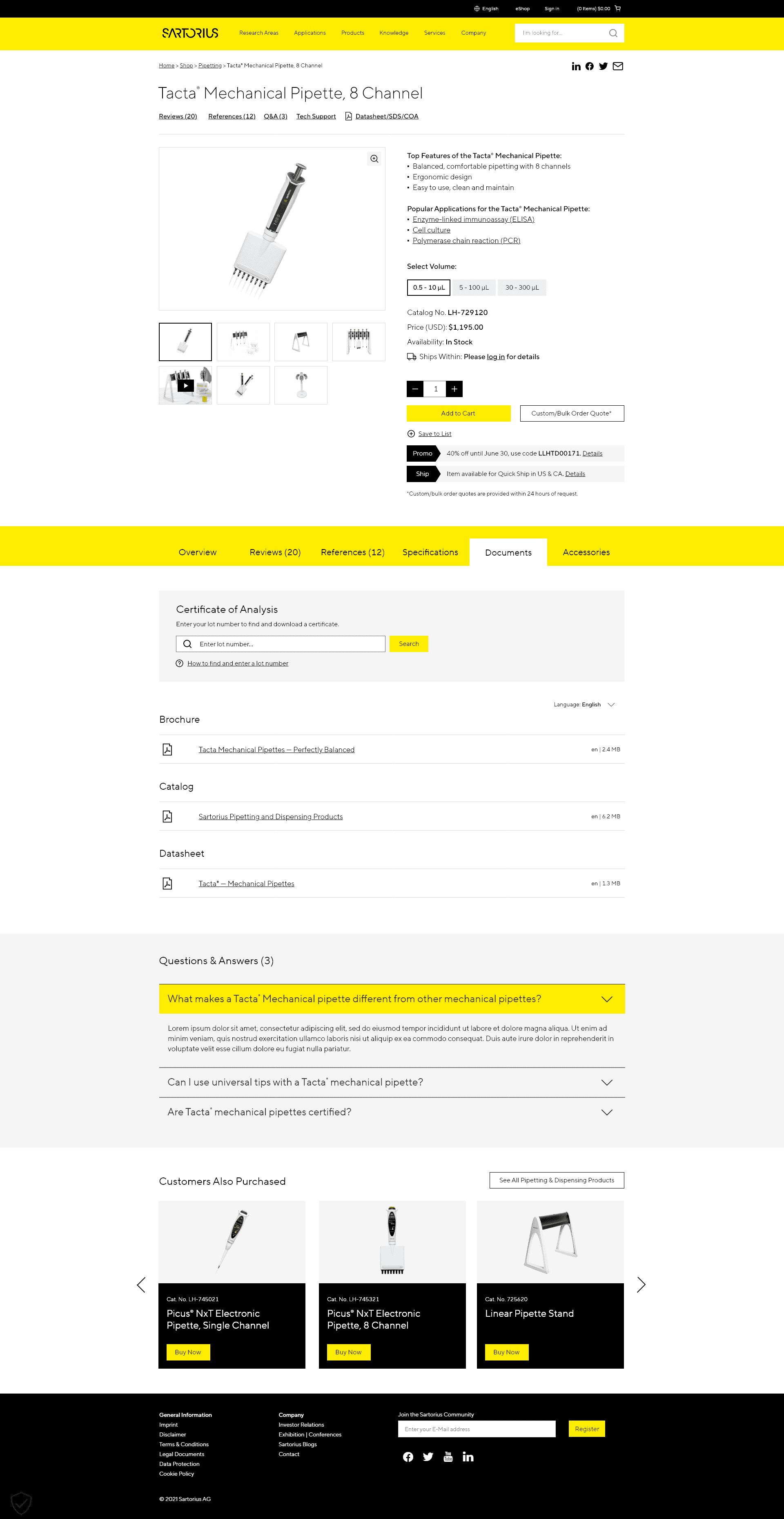
Our new product detail page design addressed many existing customer issues and provided IT with a roadmap to improve the experience.
IT began development on priority features like product availability, estimated delivery date, ratings & reviews, and links to citations, along with a completely updated UI. That being said, we are still working to make it perfect. Some requested features such as promo codes and access to certificates and safety data sheets are still in development.
Overall, since the beginning of the project we have achieved:
8
Total PDP features implemented
2
Social proof features implemented: reviews and citations
1
Brand new, modern PDP UI implemented to support new features
Outcome
Our new product detail page design addressed many existing customer issues and provided IT with a roadmap to improve the experience.
IT began development on priority features like product availability, estimated delivery date, ratings & reviews, and links to citations, along with a completely updated UI. That being said, we are still working to make it perfect. Some requested features such as promo codes and access to certificates and safety data sheets are still in development.
Overall, since the beginning of the project we have achieved:
8
Total PDP features implemented
2
Social proof features implemented: reviews and citations
1
Brand new, modern PDP UI implemented to support new features
Nicholas Fargher
© 2026 Nicholas Fargher
Nicholas Fargher
© 2026 Nicholas Fargher